Sep 2026
LAIRR is ready for the new academic year
New semester, same mission: the lab is back in session with a full bench of ongoing projects, industry collaborations, and new faces joining the team.
Lab update
 LAIRR
Laboratory of AI and Robotics Research
Discover. Innovate. Impact.
LAIRR is Heriot-Watt University's Laboratory of AI and Robotics Research, translating deep-tech breakthroughs in intelligent robotics into agile, deployable cognitive architectures for industry.
LAIRR operates at the intersection of industry-leading disciplines, translating deep-tech laboratory breakthroughs into agile, deployable, and impactful cognitive architectures.
Driving world-leading research in intelligent robotics and AI, moving beyond structured environments by infusing intelligence into the robot itself.
Through our Cognition-as-a-Service (CaaS) initiative, we solve complex, real-world challenges for partners, fostering economic growth, high-value jobs, and global competitiveness.
We move beyond "structured environments" by infusing intelligence into the robot itself, allowing for operation in complex, dynamic, and unpredictable settings.
LAIRR operates at the intersection of world-class academic research and industrial application. We are part of the Global Research Institute (GRI) in AI and Robotics at Heriot-Watt University, leveraging this prestigious ecosystem to push the boundaries of cognitive intelligence.
Our research is physically and strategically anchored within the UK National Robotarium (UKNR). This unique partnership gives us access to unparalleled state-of-the-art testing facilities and high-performance computing, enabling us to translate complex theoretical models into real-world, industry-ready solutions.
Teaching robots to grasp, manipulate, and adapt through learned policies rather than hand-coded rules.
Enabling autonomous systems to understand where they are and move safely through unpredictable spaces.
Designing safe, intuitive collaboration between people and robots sharing the same physical space.
Perception systems that let robots see, interpret, and react to complex, cluttered environments.
Integrating hardware, sensors, and control systems into cohesive, reliable robotic platforms.
Formal, mathematically grounded methods for planning and controlling robot behaviour under uncertainty.
Complex assembly and quality control.
Last-mile delivery and autonomous warehouse management.
Assisted living and diagnostic support.
Predictive maintenance for remote and hazardous assets.
Advanced mobility and environmental perception.
Autonomous surface and underwater operations for environmental remediation and offshore asset inspection.
CaaS is our commercial arm, providing a structured pathway for industry partners to move from innovation to adoption, transforming research into reality.
World-leading science in intelligent robotics and AI.
Structured translation of lab breakthroughs into deployable systems.
De-risked integration into partners' real-world operations.
Talk to our CaaS team about a Robotics Readiness Review or a scoped Proof of Concept for your operation.
A portfolio of research projects and strategic industry collaborations, applying our CaaS framework to real operational challenges.
Engineering a cognitive architecture for Unmanned Surface Vehicles (USVs) that delivers scalable, intelligent debris removal. CogWaters serves as a key driver for industrial ESG solutions and advanced robotic autonomy.
A robotic system for the detection and collection of debris on water surfaces, competing in autonomous and teleoperated tracks. Funded by Mubadala's Higher Education Student Competition, GBOT won third prize in the autonomous track.
Resilient Robot Perception & Operations: focused on robust perception for complex environments. By enabling machines to navigate uncertainty with high reliability, R2PO provides the foundational intelligence for safe, autonomous industrial operations.
A manipulation challenge to pick trash from shelves and place it in the correct bin, entered in the Emirates Robot Competition (ERC 2025), where the team took home the winner's prize.
A portfolio of confidential collaborations with sector leaders spanning automated manufacturing, logistics, and critical infrastructure monitoring, applying our CaaS framework under strict IP protection protocols.
A lightweight, near-lossless compression framework for LiDAR point clouds, using a compact neural predictive-coding model to encode only sparse residuals. LiZIP outperforms industry-standard LASzip by 7.5–14.8% and Google Draco by 8.8–11.3% on the NuScenes and Argoverse datasets, easing the real-time processing and V2X bandwidth bottleneck in autonomous vehicles.
A vision system and open dataset for spotting small, reflective marine debris (aluminum cans on water) from an autonomous surface vehicle. Built from ∼7.3k annotated images (expanded to ∼57k via augmentation), it boosts YOLOv11 performance 12× over generic datasets; YOLOv11+ByteTrack gives the most stable multi-object tracking, while YOLOv11+SAHI maximizes far-field detection for single-can pickup missions.
LAIRR works alongside government innovation bodies, technology ventures, and industry leaders across the UAE and beyond, applying our CaaS framework to de-risk adoption for every partner we work with.






We partner with diverse sector leaders to deliver tailored innovation. Our CaaS framework ensures that projects, ranging from automated logistics to critical infrastructure, are delivered with strict adherence to confidentiality and IP protection.
Every collaboration runs through our CaaS pathway: Robotics Readiness Reviews, feasibility studies, and scoped proofs of concept, so partners can validate value before committing to full deployment.
Most of our industry collaborations, spanning manufacturing, logistics, and critical infrastructure, operate under strict NDA and IP protection protocols and aren't named publicly here.
If you're exploring cognitive robotics for your operation, our CaaS team can scope a starting engagement.
Peer-reviewed papers and preprints from the lab, spanning human-machine interfaces, reinforcement learning, and robot perception.
Project milestones, publications, competition results, and events from the lab.
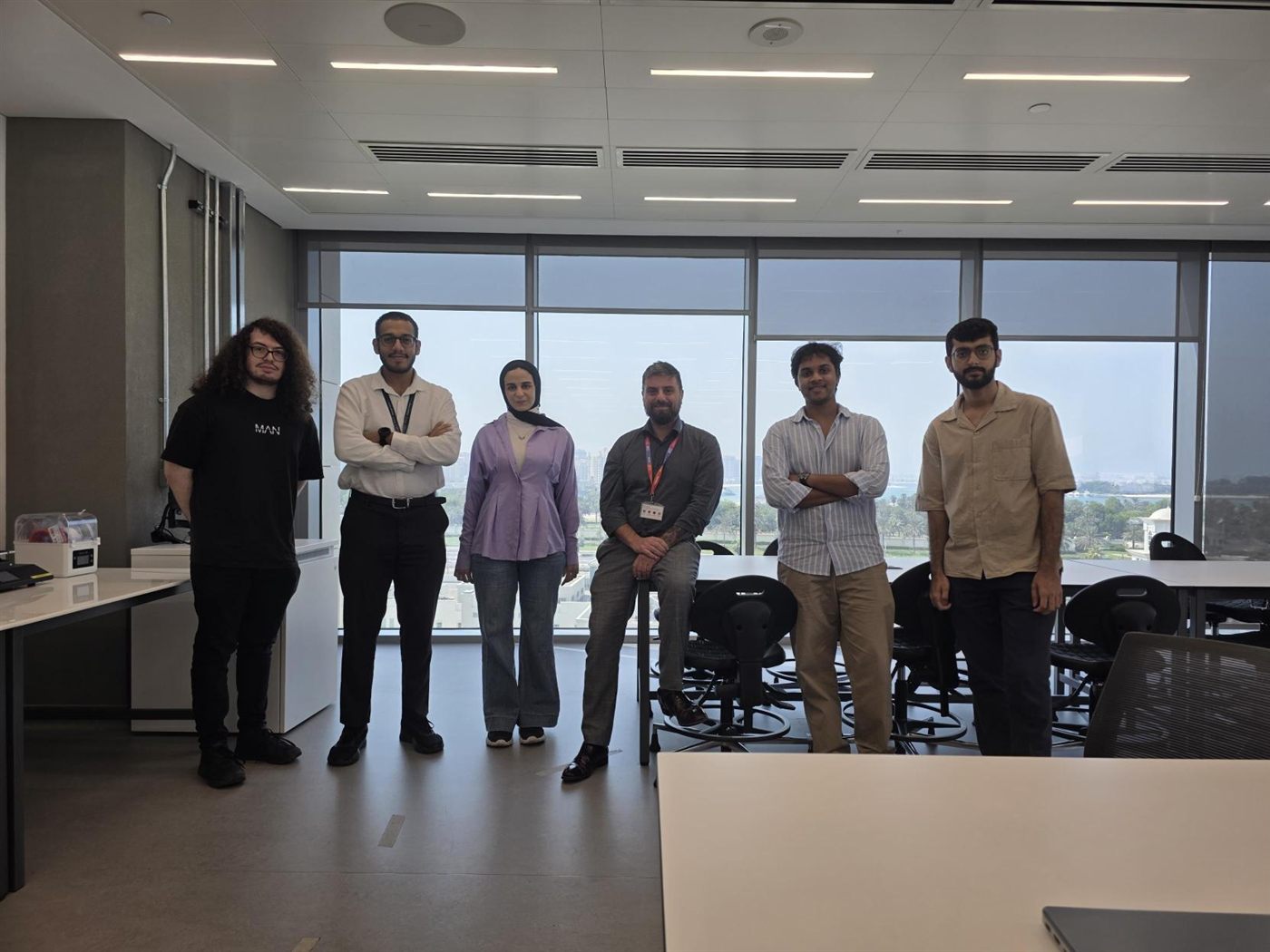
New semester, same mission: the lab is back in session with a full bench of ongoing projects, industry collaborations, and new faces joining the team.
New semester, same mission: the lab is back in session with a full bench of ongoing projects, industry collaborations, and new faces joining the team.
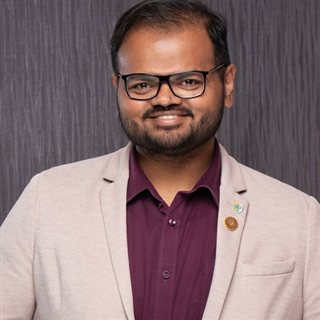
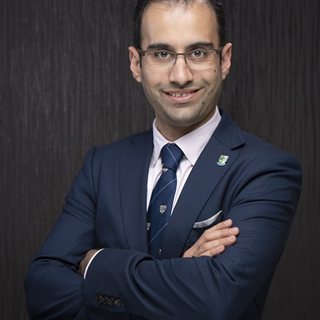
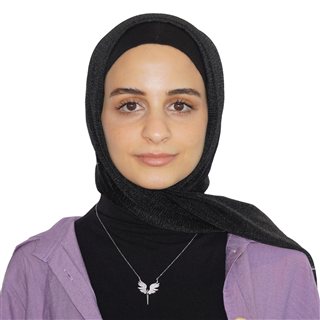
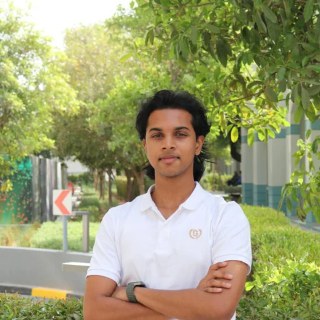
Left to right: Zaid Aljundi, Abdul Maajid, Rahaf Abu Hara, Dr. Claudio Zito, Aditya Shibu, and Abban.
New semester, same mission: the lab is back in session with a full bench of ongoing projects, industry collaborations, and new faces joining the team. Here's to a great year ahead for everyone at LAIRR.
LAIRR is proud to share that Rahaf Abu Hara’s first paper, written during the first year of her PhD, has been accepted to the NeurIPS 2026 Main Track. 🎉
The paper, “Reflective Prompted Policy Optimization: Trajectory-Grounded Revision and Salience Bias,” introduces R2PO, a reflective approach to LLM-based policy optimization, co-authored with Vaibhav Murarri and supervised by Dr. Claudio Zito.
A proud milestone for Rahaf and for the whole lab. See everyone at NeurIPS 2026! 🎉
Our multi-disciplinary team accelerate innovation by bridging the gap between cutting-edge research in robot learning, computer vision, and autonomous systems and high-impact industrial deployment.

Leads the lab's research direction and its commercial arm, with a research focus on robot learning, manipulation, and decision-making. Principal Investigator on CogWaters and GBOT.

Computer Vision, Machine Learning, Graph Neural Networks

Marine Robotics & Autonomous Systems
Multimedia Signal Processing, Affective Computing, Visual Analytics
3D Reconstruction, Structure from Motion
Computer Vision, Quantum, Machine Learning
Whether you're an industry partner exploring CaaS, a prospective student, or a fellow researcher, here's where to find us.
Tell us about your project, partnership idea, or question, and we'll get back to you.
Follow our work, browse our code, or reach the director directly.
Dubai International Academic City, UAE
Home lab & testing infrastructure, Heriot-Watt University
Global Research Institute, Heriot-Watt University